

2
The American <a href="https://middleeastdaily.net/breast-cancer-awareness-month-st-georges-university-advocates-for-advancing-a-risk-informed-and-equitable-approach-to-breast-cancer-screening-in-the-middle-east/”>University of Beirut (AUB) hosted its 52nd Middle East Medical Assembly (MEMA) on October 22–25, 2026, under the theme “Women’s Health Across the Life Course: Redesigning Future Care.” Co-organized with M2Med and endorsed by the National Council for Scientific Research (CNRS), the event featured workshops and stimulating discussions on contemporary women’s health issues.
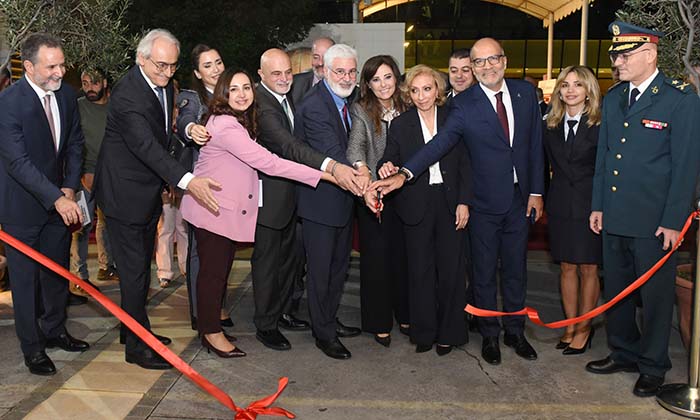
The assembly was inaugurated on October 22 at the Issam Fares Lecture Hall at AUB in an opening ceremony attended by Ambassador Sahar Baassiri Salam, vice president of the National Commission for Lebanese Women; Dr. Fadlo Khuri, AUB president; Dr. Raymond Sawaya, vice president for medical affairs and Raja N. Khuri Dean of the Faculty of Medicine at AUB; Dr. Ali Taher, associate vice president for academic centers, development, and external affairs at AUB; and Dr. Faysal El Kak, chair of MEMA 2026 and director of the Women Integrated Sexual Health Program at the American University of Beirut Medical Center (AUBMC).
In its first-ever edition devoted entirely to women’s health, the 52nd assembly engaged local, regional, and international healthcare leaders, researchers, experts, and educators to promote an integrative and innovative approach to women’s healthcare. The four-day gathering featured sessions on women’s healthcare across the lifespan, covering adolescence, pregnancy, midlife, menopause, and healthy longevity.
Dr
Khuri emphasized the importance of the life-course approach that lies at the core of MEMA’s theme this year. “At a time of widening disparities in wealth, information literacy, and access, female patients should not have to become expert advocates for themselves simply to have their symptoms taken seriously or their health concerns properly investigated. Their voices and experiences must inform the care they receive,” he said.
In her keynote speech, Ambassador Salam highlighted the national significance of the assembly beyond medicine. “The Lebanon we want will not emerge simply by asking women to contribute more, endure more, or carry more responsibilities. It will emerge when women have the health, the rights, the opportunities, and the freedom to realize their full potential—and when they are equal partners in shaping our country’s future,” she said.
Highlighting this scientific platform’s rich history, Dean Sawaya said, “MEMA continues our proud tradition at AUB of bringing medical authorities to advance clinical excellence and cutting-edge research.”
Dr. Taher also underscored MEMA’s long legacy, saying, “Leading the organization of MEMA is both a responsibility and a commitment to sustaining a strong tradition of scientific excellence and collaboration at AUB. Our goal is to bring together leading expertise and diverse perspectives to advance women’s health and help shape a future of more comprehensive, integrated, and equitable care across the region.”
“A health system is judged by how it treats a woman at every stage of her life, not at one of them, and a society is as healthy as the women in it,” said Dr. El Kak, the 52nd MEMA chair. “Lebanese women have carried this country through collapse and war. This assembly is about what we owe them in return.”
Rather than addressing women’s life phases as separate territories, MEMA’s four-day program connected women’s health issues through integrated sessions, inviting gynecologists, obstetricians, endocrinologists, psychiatrists, oncologists, and gender and sexual health professionals into the conversation. The program also highlighted and assessed current and innovative approaches to women’s healthcare, including advances in therapeutics, technology, artificial intelligence, surgery, and precision medicine.
Recognizing the health challenges facing women in this region, MEMA sought to examine how social, cultural, environmental, and policy factors affect their health. The meeting concluded on October 25 at the Halim and Aida Daniel Academic and Clinical Center with a plenary titled “The Beirut Declaration on the Future of Women’s Health,” which put forward ten commitments to women’s healthcare across the life course anchored in Lebanon and the region.
In addition, Dr. El Kak announced that AUB is making an institutional commitment to become a menopause-friendly university, the first in the Arab world to do so and one of only a handful worldwide.
The Beirut Declaration and AUB’s commitment to becoming a menopause-friendly university are intended to set an agenda that extends beyond the assembly’s four-day program. Together, they reinforce its central message: advancing women’s health requires sustained attention to their needs at every stage of life, supported by more comprehensive, integrated, and equitable care.